
Tree Steward Resource Hub
Got fruit? CFR can harvest your trees!
Boulder County has a long orchard history, and today fruit trees continue to thrive across our neighborhoods — from historic plantings to trees residents have lovingly planted themselves. Each season, these trees produce more fruit than most households can use.
Community Fruit Rescue coordinates volunteer-powered harvests throughout Boulder County, with priority given to areas of high fruit density, food access needs, and wildlife activity. Harvest season generally runs from mid-summer through late fall, depending on the fruit and weather conditions. If there’s fruit, we will harvest!
Our goal is to ensure surplus fruit doesn’t go to waste. By harvesting excess fruit, we:
Donate fresh produce to food-insecure individuals and families
Reduce wildlife attractants — especially for black bears
Support healthy, well-managed fruit trees in our community
When you register your tree and request a harvest, we organize community volunteers to pick, sort, and distribute the fruit. Tree stewards may keep up to 1/4 of the CFR harvest, volunteers share a portion, and at least half is donated to partner organizations across Boulder County working to support local food security efforts.
Quick Links
-
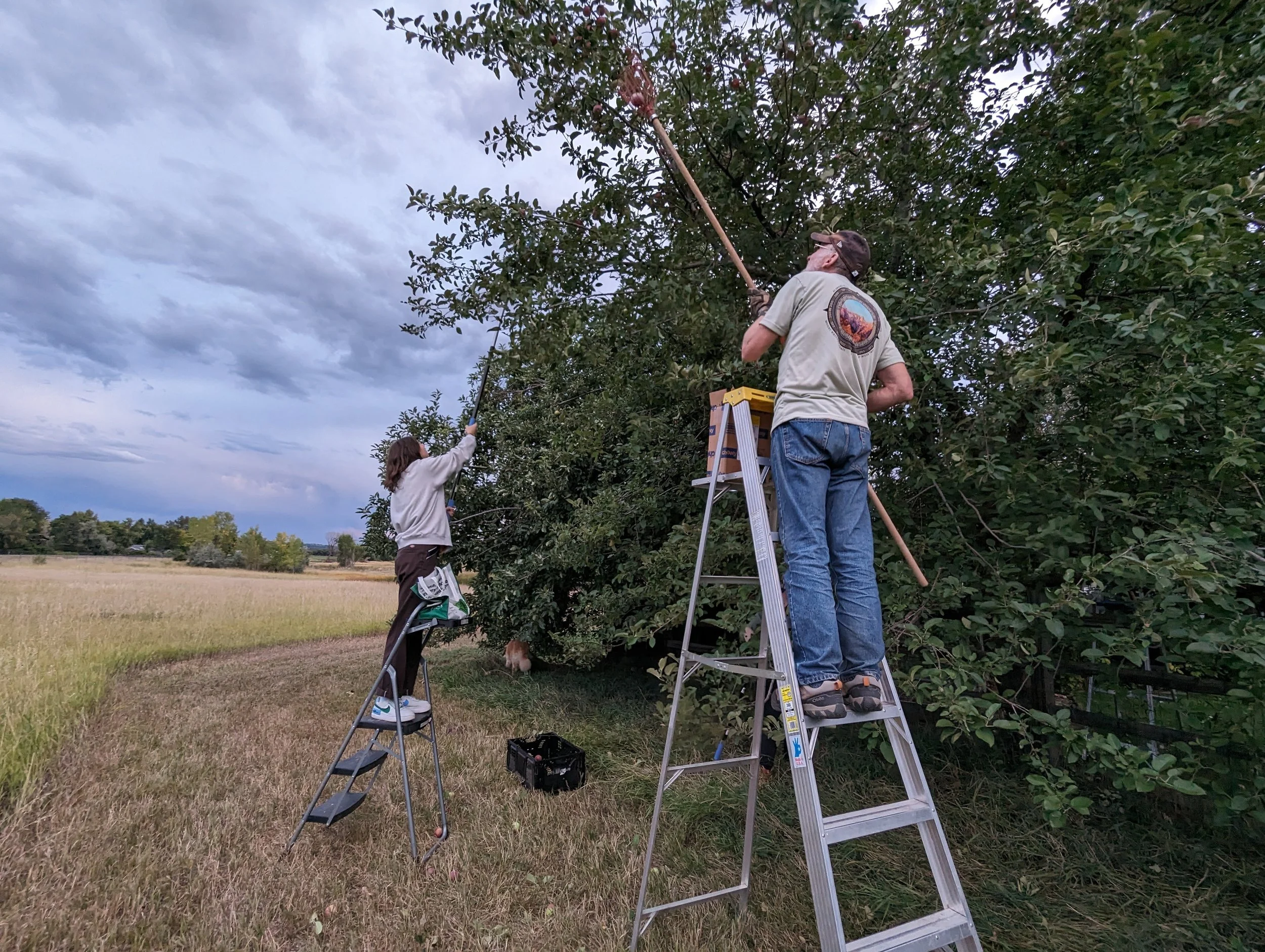
Community Fruit Rescue organizes community volunteers, led by a trained “harvest leader” volunteer, to harvest surplus fruit from registered sites throughout Boulder County. Once your site is registered and a harvest is requested, our Harvest Coordinator schedules a volunteer team to pick, sort, and distribute the fruit.
Harvests are volunteer-powered and scheduled based on ripeness, capacity, bear activity (if any), and priority areas. After your harvest is confirmed, our team communicates details and coordinates everything needed for a smooth event.
CFR provides all the necessary equipment, including picker poles, crates, buckets, ladders, and more. Tree Stewards are encouraged to participate in the harvest, but aren’t required to be present as long as our volunteers are able to access the tree(s).
Please note: Each site must be registered in advance, and a harvest request must be submitted annually. This ensures we can plan safely, follow required protocols, and account for the unique conditions and timing of your tree each season.
-
We harvest edible fruit that can be safely distributed and donated, typically:
Apples
Pears
Plums
Apricots
Peaches
Cherries
Grapes
Chokecherries
Harvest season typically runs from mid-summer through late fall, depending on fruit variety and weather conditions.
We do not harvest:
Crab apples (Malus coronaria)
Non-edible fruits
Fruit that is unsafe for distribution
If you’re unsure whether your tree qualifies, you can contact us before submitting a request.
-
In 2026, we are primarily harvesting in and near:
City of Boulder
Niwot
Town of Erie
City of Lafayette
City of Longmont
We occasionally accommodate sites outside these areas, depending on volunteer capacity and scheduling logistics. Priority is given to areas with high fruit density, food access needs, and wildlife concerns. If you are located outside of these priority areas, we encourage you to register your site and/or request a harvest, or contact us. If we have the capacity to harvest your tree(s), we’ll do everything we can to make it happen!
-
Tree Registration is a one-time process for new tree stewards.
Harvest Requests must be submitted annually.If you'd like to register your trees and request a harvest in the Erie area, please do so here. For all other harvests, please proceed below.
RETURNING TREE STEWARDS:
Make a tax-deductible donation to guarantee scheduling (optional but recommended — see below).
Submit your annual Harvest Request form.
Our Harvest Coordinator (harvest@fruitrescue.org) will follow up over email confirm your date or add you to the waitlist.
NEW TREE STEWARDS:
Make a tax-deductible donation to guarantee scheduling. (optional but recommended — see below).
Complete the Tree Registration & Harvest Request form.
Our Harvest Coordinator (harvest@fruitrescue.org) will follow up over email confirm your date or add you to the waitlist.
Due to the variability of Boulder County’s fruit trees, all harvests require annual request submission. Each and every growing season is unique!
-
CFR’s harvest services are in high demand, and each average site costs approximately $350 to coordinate. Expenses for our small team of 2 part-time individuals include staff time, volunteer coordination, equipment maintenance, transportation, and fruit distribution logistics.
To guarantee placement on our harvest calendar, we request a donation of $100 or more (depending on tree size and quantity). This support allows us to prioritize your harvest and sustain our small, mission-driven team.
Financial assistance is available for those unable to contribute - simply state this in your harvest request form and we will proceed to schedule your site as a guaranteed harvest, no questions asked. All other requests are scheduled on a first-come, first-served basis as capacity allows.
-
Tree stewards may keep up to 1/4 of the harvest if desired. Volunteer pickers share a combined 1/4, and at least 1/2 of the fruit is donated to local food partners serving individuals and families experiencing food insecurity throughout Boulder & Broomfield County through a variety of partner sites such as Community Food Share, Boulder Food Rescue, Longmont Food Rescue, Sister Carmen Community Center, and more. Inedible fruit is donated to local animal sanctuaries and other animals at local neighborhood farms or regenerative farms. Rotten fruit is placed in each tree steward’s compost bin (if available), or left with the tree steward for disposal.
Your tree’s surplus fruit directly supports neighbors in need, reduces food waste, and helps discourage black bears and other sensitive wildlife from lingering in urban areas.
-
Food donors may be eligible for tax deductions or tax credits and will receive documentation of crop types and amounts to submit with tax returns following each harvest.
-
Please visit our Tree Steward FAQ page, or contact us!
Background

How to tell when your fruit is ready to be picked
Please follow these steps to determine when your fruit will be ripe or ready to be picked. Please note that Community Fruit Rescue will not harvest unripe fruit and reserves the right to cancel harvests if the fruit is deemed premature. Need help? Contact harvest@fruitrescue.org.
Apples: Cut the apple open and if the seeds are brown and the fruit tastes sweet, it’s usually ripe. However, apples can sometimes be at their peak ripeness and still have white seeds. The taste test is key here!
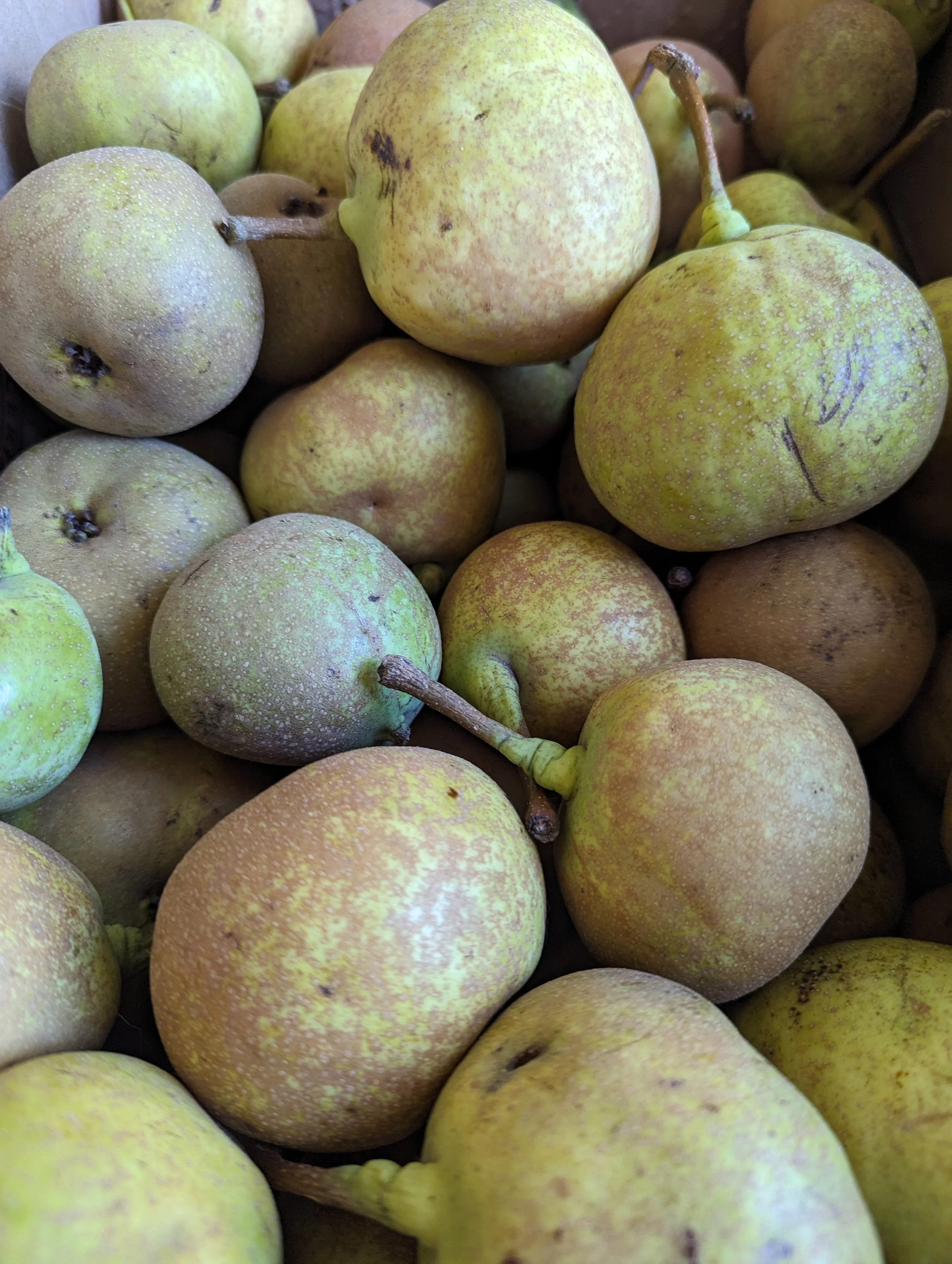
Pears: Pears should be harvested when fully formed, but not ripe. While each variety is different, you can typically tell when the neck of the pear is just beginning to soften, and the fruit easily separates from the tree when you tip it away from the branch. Pears ripen best off of the tree at room temperature.
Plums: Plums tend to be darker in color, have a powdery appearance, and are softer to the touch.
Peaches: Peaches should no longer be green in appearance, still be fairly firm, but have a slight give when pressed.
Grapes: When ripe, the stems and grape seeds will be brown. The grapes should taste sweet.
Cherries: The fruit should be firm and fully colored. Sour cherries will come off the stem when they are ripe, while sweet cherries should be tasted for maturity.
Chokecherries: Typically ripe in July or early August, the berries should be a deep purple, dark crimson, or nearly black. They will be slightly soft to the touch and will detach easily from the stem with a slight pull.
Do you have bear activity on your property?
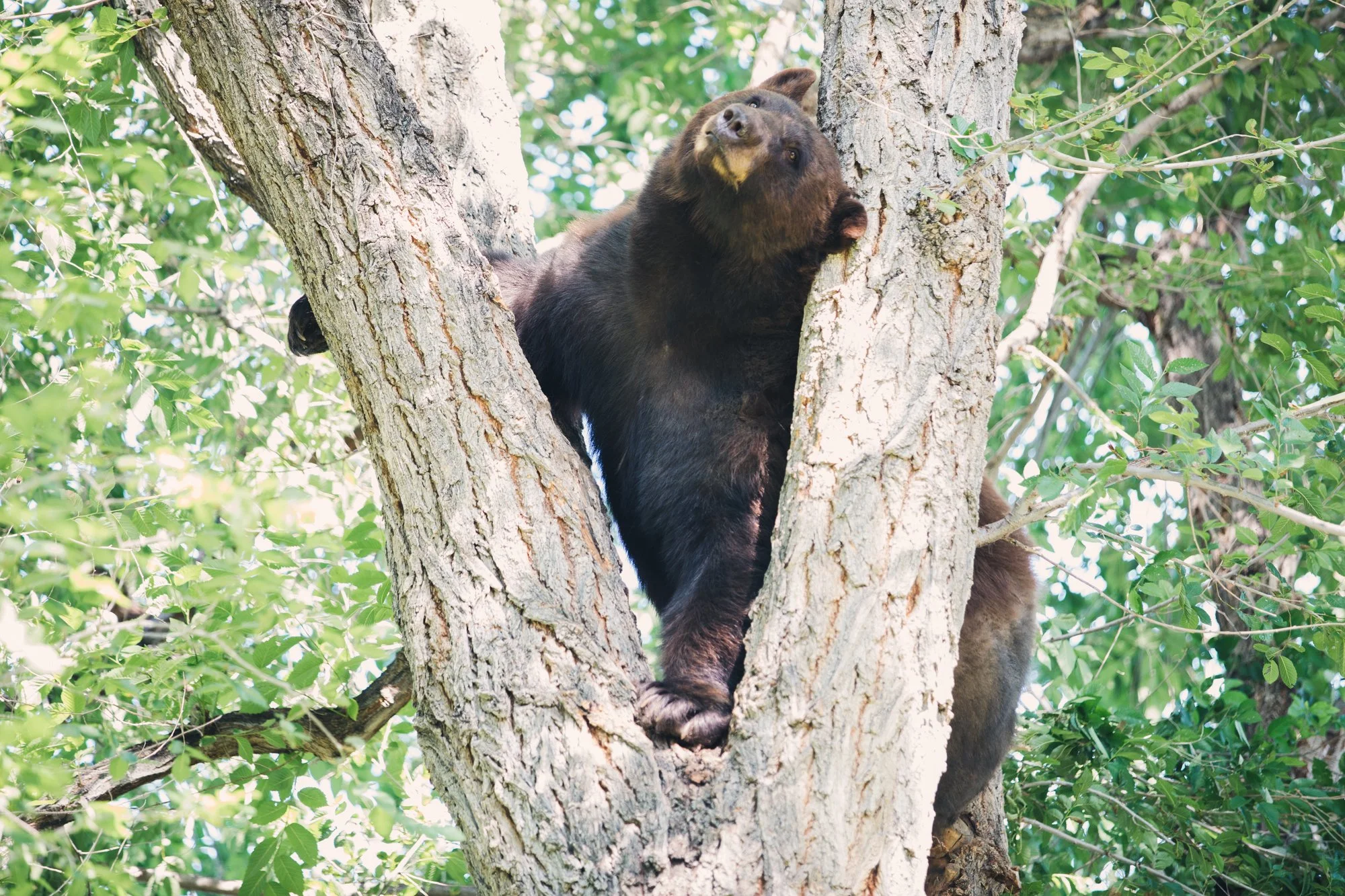
Fruit trees are a valuable community resource, but fallen and unharvested fruit can attract bears and other wildlife into neighborhoods. Because many of our communities sit so close to the foothills, bears will naturally pass through town — the goal is to prevent them from finding easy food sources that encourage them to stay. Bears that spend more time in urban areas have been proven to have higher mortality rates.
If you are experiencing bear activity on your property, please register your fruit tree (new tree stewards) or request a harvest (returning tree stewards) immediately and contact bears@fruitrescue.org so we can get that fruit removed from your tree!
If the bear is currently on your property and requires assistance, please the City of Boulder's dispatch line: 303-441-3333 Option #8. Wildlife Officers can provide support that will help protect the bears and local community, such as hazing, removing attractants, calling Bearsitter volunteers to keep an eye on the bear, and more.
Through community harvests and good tree stewardship, we can help keep both people and bears safer while ensuring surplus urban fruit is put to good use feeding our community.
Harvesting in Erie, CO
Got fruit trees in Erie, Colorado? We have great news: the Town of Erie is generously subsidizing the cost of fruit harvests for local tree stewards again this year! If your tree is located within the Town of Erie, you're eligible to participate at no cost to you.
Please note: a limited number of harvests are available, and they will be scheduled on a first-come, first-served basis - so we encourage you to sign up early!
When you reach the question on either form through the buttons below about making a donation to receive a guaranteed harvest, please select the option that says: “I’m participating in the Town of Erie's harvest program.”
We're grateful to the Town of Erie for supporting this effort to reduce food waste, promote community resilience, and support local food security.
Protection for Tree Stewards
CFR properly trains, supervises and holds liability coverage for all volunteers who harvest with us. All volunteers are required to register in advance and must agree to our Terms of Participation and Release Agreement.
Federal Bill Emerson Good Samaritan Food Donation Act - In 1996, President Clinton signed this act to encourage donation of food and grocery products to non-profit organizations for distribution to individuals in need. This law:
Protects you from liability when you donate to a non-profit organization;
Protects you from civil and criminal liability should the product donated in good faith later cause harm to the recipient;
Standardizes donor liability exposure. You or your legal counsel do not need to investigate liability laws in 50 states; and
Sets a floor of "gross negligence" or intentional misconduct for persons who donate grocery products. According to the new law, gross negligence is defined as "voluntary and conscious conduct by a person with knowledge (at the time of conduct) that the conduct is likely to be harmful to the health or well-being of another person."
For more information: Feeding America.