
Wildlife Coexistence
Harvesting fruit to protect bears & people.
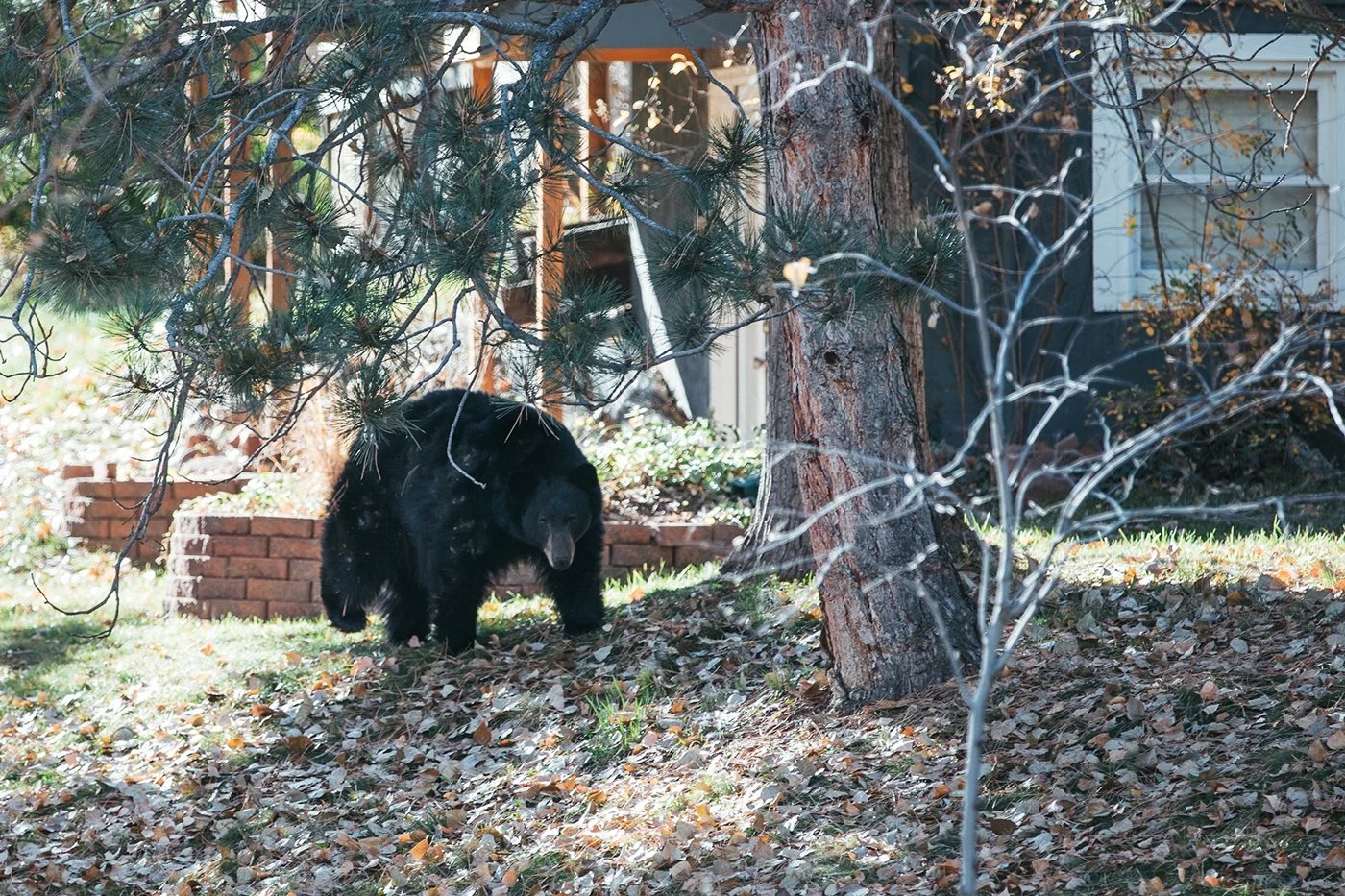
CFR’s Wildlife Coexistence Program helps protect both people and wildlife by reducing attractants in our neighborhoods — especially surplus fruit that draws bears and other animals into urban areas. We focus particularly on black bears, since unsecured fruit is one of the most common food sources that brings them into town. While fruit is a natural part of a bear’s diet in wild landscapes, easy access to urban fruit can encourage bears to spend more time in neighborhoods, where they face greater risks from vehicle collisions, conflicts, and other dangers.
Because our communities sit so close to the foothills, wildlife will always move through town. The goal is not to eliminate these encounters from ever happening, but to prevent animals from finding easy food sources that encourage them to stay, creating unsafe situations for both wildlife and human communities.
Through rapid-response harvests in areas with bear activity, community harvest coordination, direct tree steward support and guidance, and public education about managing fruit trees and other attractants, we help keep wildlife moving through safely while ensuring surplus fruit is shared with people who need it.
By harvesting fruit and supporting better tree stewardship, we help our community coexist more safely with the wildlife that shares this landscape.
Learn more
Are you experiencing bear activity in or near your fruit trees? Register your site and/or request a harvest with CFR so we can get that fruit removed and discourage bears from visiting your property!
The connection between bears & fruit
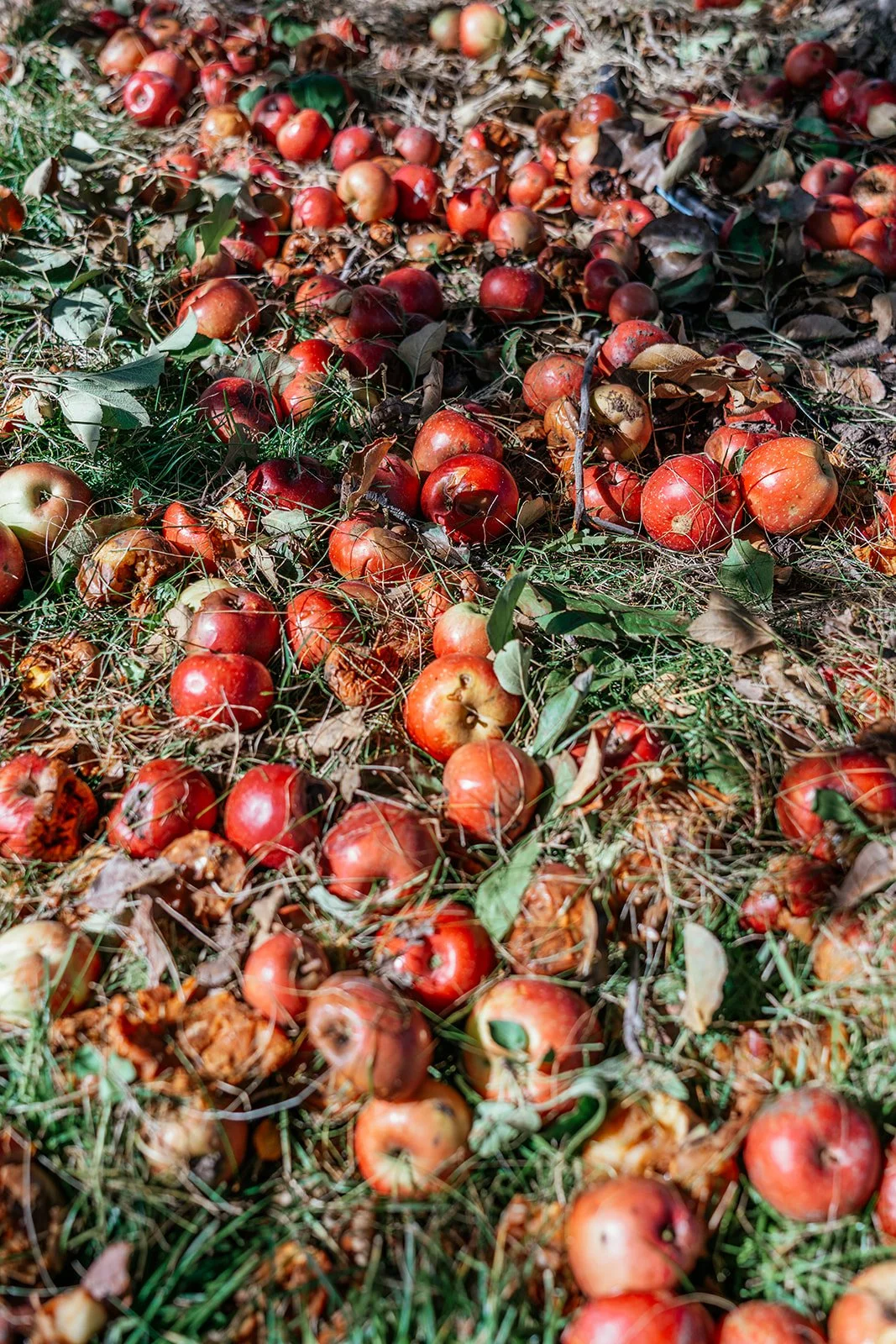
Dating back to the 1880s, much of the Boulder area was planted as fruit orchards, and today many of these trees still thrive throughout neighborhoods, parks, and open spaces. But much of this fruit goes unharvested each year, falling to the ground and creating both waste and wildlife attractants in urban areas.
Partners at the City of Boulder and Colorado Parks & Wildlife identify unsecured trash as the primary bear attractant, with unharvested fruit following right behind. Ripe fruit also attracts animals like deer and raccoons, which in turn draw predators such as mountain lions into urban spaces.
Most notably, apples and pears are an easy and appealing food source for black bears — especially in years when natural forage in the foothills is limited. Managing surplus urban fruit helps reduce these attractants and encourages wildlife to keep moving through, rather than settling in neighborhoods.
Bear Coexistence Partners

The problem
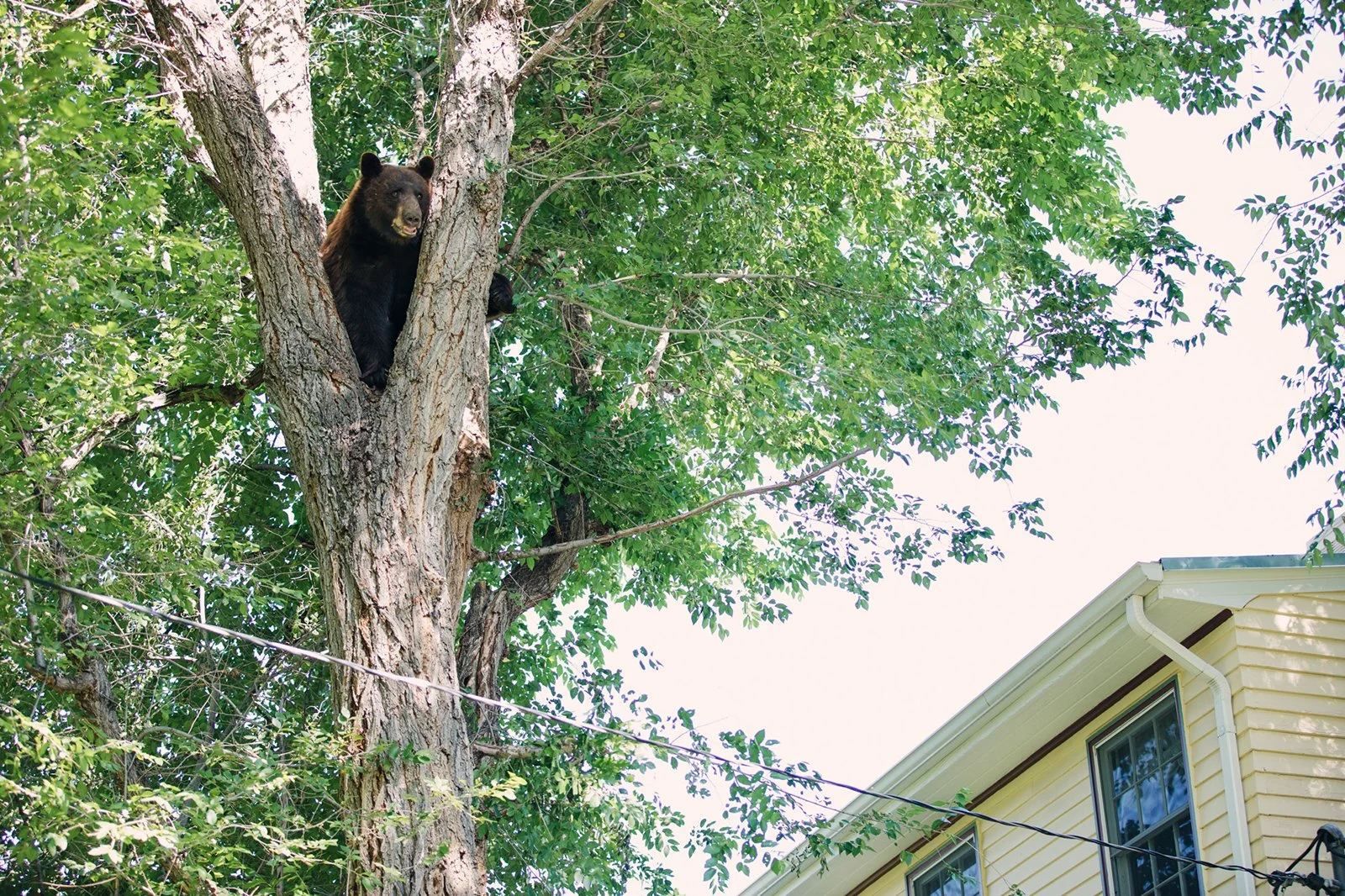
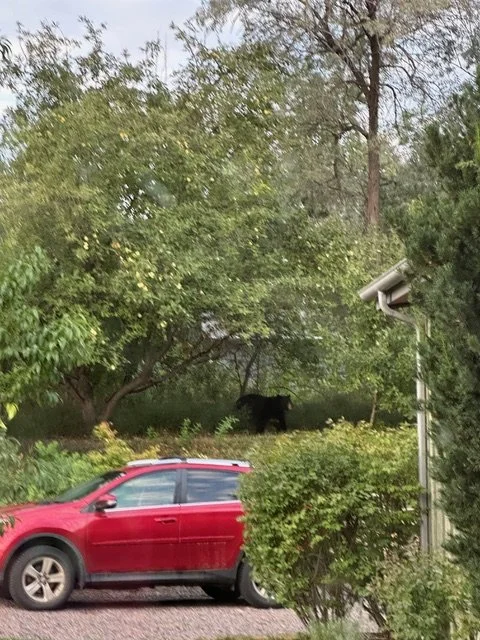
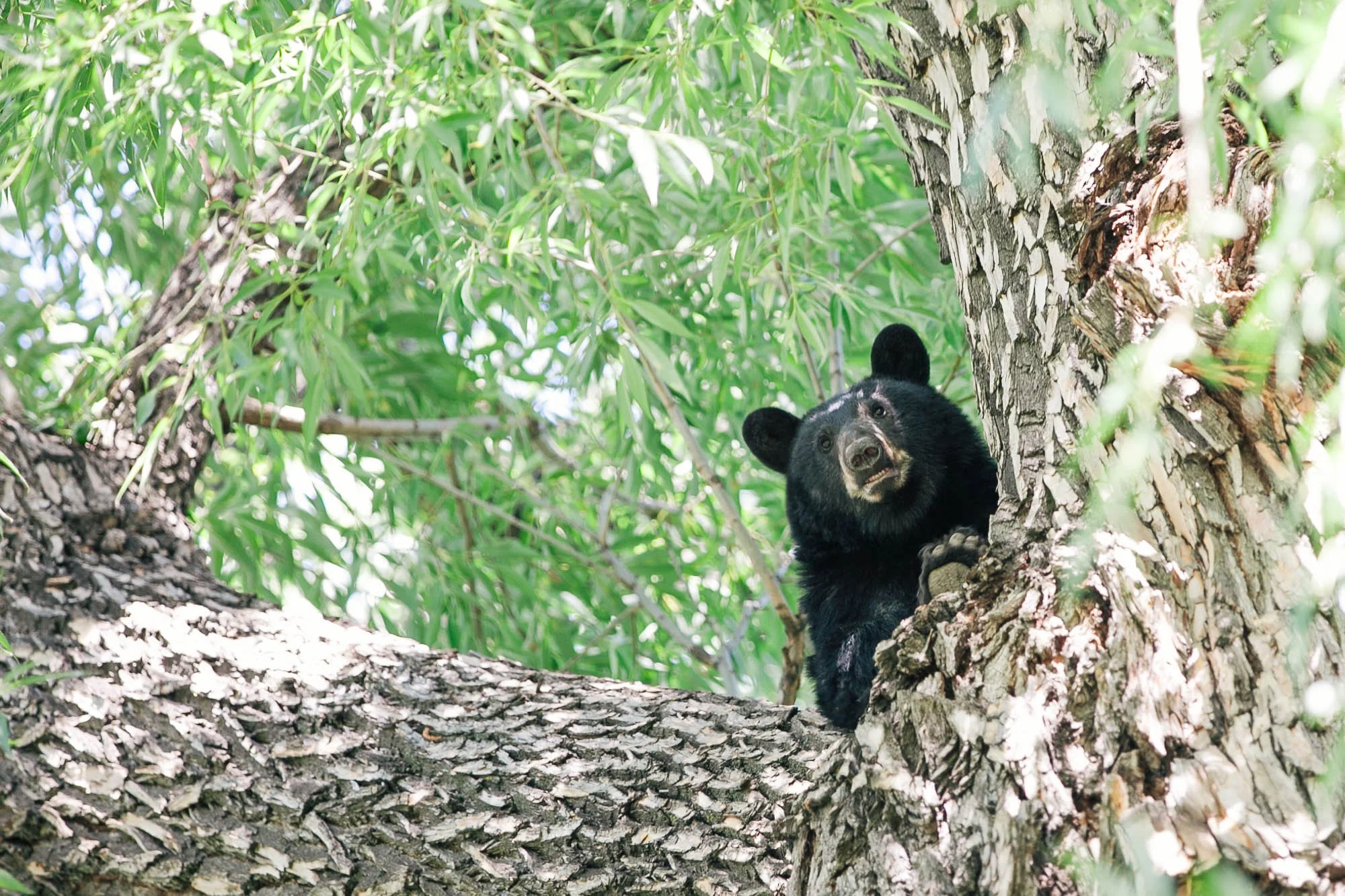
It’s not uncommon to see black bears moving through neighborhoods and urban areas, especially in late summer and fall. At this time of year, bears must consume roughly 20,000 calories per day to prepare for winter hibernation, so they seek out the easiest food sources available — unsecured trash, compost, bird feeders, and ripe fruit. And as we all know, Boulder has a lot of fruit.
Some people worry that harvesting urban fruit removes an important food source for bears. However, research and local wildlife management experience show that bears spending more time in urban areas face much higher mortality rates. Bears drawn into neighborhoods risk being hit by cars, ingesting harmful materials from trash, becoming habituated to people, and ultimately being euthanized when conflicts escalate. Habituated bears can also pose public safety concerns when they lose their natural fear of humans.
We also regularly hear from fruit tree stewards that when bears discover backyard trees, they often linger in the area. Families may feel unsafe letting children or pets outside, trees are frequently damaged as bears break limbs to access fruit, and additional property damage can occur as bears search for other food sources nearby.
Our goal is to keep bears healthy, wild, and free in their natural habitats — while helping neighbors safely harvest and share the fruit growing in our community.
What we do
Bear Conflict Harvests
CFR works with tree stewards to quickly harvest fruit in areas experiencing bear activity, helping remove attractants before conflicts escalate. These rapid-response harvests are coordinated when concerns are reported by tree stewards or shared by partners including the City of Boulder, Boulder Bear Coalition, and Colorado Parks & Wildlife.
If bears or other wildlife are visiting your fruit trees, we encourage you to contact us and submit a harvest request so fruit can be removed as quickly as possible.
DIY Harvest Kits
For those able to harvest their own fruit, Community Fruit Rescue offers Do-It-Yourself Harvest Kits that community members can rent to safely pick fruit themselves. Participants can keep what they harvest or donate surplus fruit to local organizations, helping expand harvest capacity and reduce attractants at more homes throughout the community.
Messaging & Outreach
Education is a core part of our work. Information about living responsibly with wildlife and reducing attractants is incorporated into CFR harvests, workshops, and events. Harvest Leaders and volunteers help share best practices with homeowners and neighbors, helping build a community culture that supports safer coexistence with wildlife.
What to do if you encounter a bear on your property
Because of Boulder's close proximity to the foothills, black bears and other wildlife will inevitably wander into our urban areas each year. While we can't keep them out of the city 100% of the time, we can discourage them from wanting to stay. And that is the goal: don't let them get too comfortable in town. How do we do this? By removing the main reason they are lured into town: food!
Follow these tips to bear-proof your home, and learn what to do if you see a bear. More tips are available through our colleagues at the City of Boulder, Colorado Parks & Wildlife and Boulder Bear Coalition.
IF YOU SEE A BEAR
Stay calm and keep your distance.
Bring kids and pets indoors.
Alert your neighbors, but avoid sharing an exact location on public social media platforms or Nextdoor.
Scare the bear from a safe distance: be sure the bear has a clear escape route and scare it away with loud noises and bright lights.
Call 303-441-3333 Option #8 for the City of Boulder police non-emergency dispatch to report bear activity that may require a response to the area (ex: bear currently in your yard).
Call 911 for life-threatening emergencies.
BEAR-PROOF YOUR HOME
Secure your trash and compost in bear-resistant canisters and be sure to keep them fully latched shut. Don't have one? You can request one from your waste hauler!
Harvest ripe fruit (we can help!)
Take your bird feeders (hummingbird feeders included) down from March-November when bears are active. Instead, attract birds by planting pollinator-friendly gardens!
Install electric fencing around chicken coops, beehives, and small livestock (this requires a permit in the City of Boulder).
For more tips, visit Colorado Parks & Wildlife
GET INVOLVED
Be a Harvest Leader
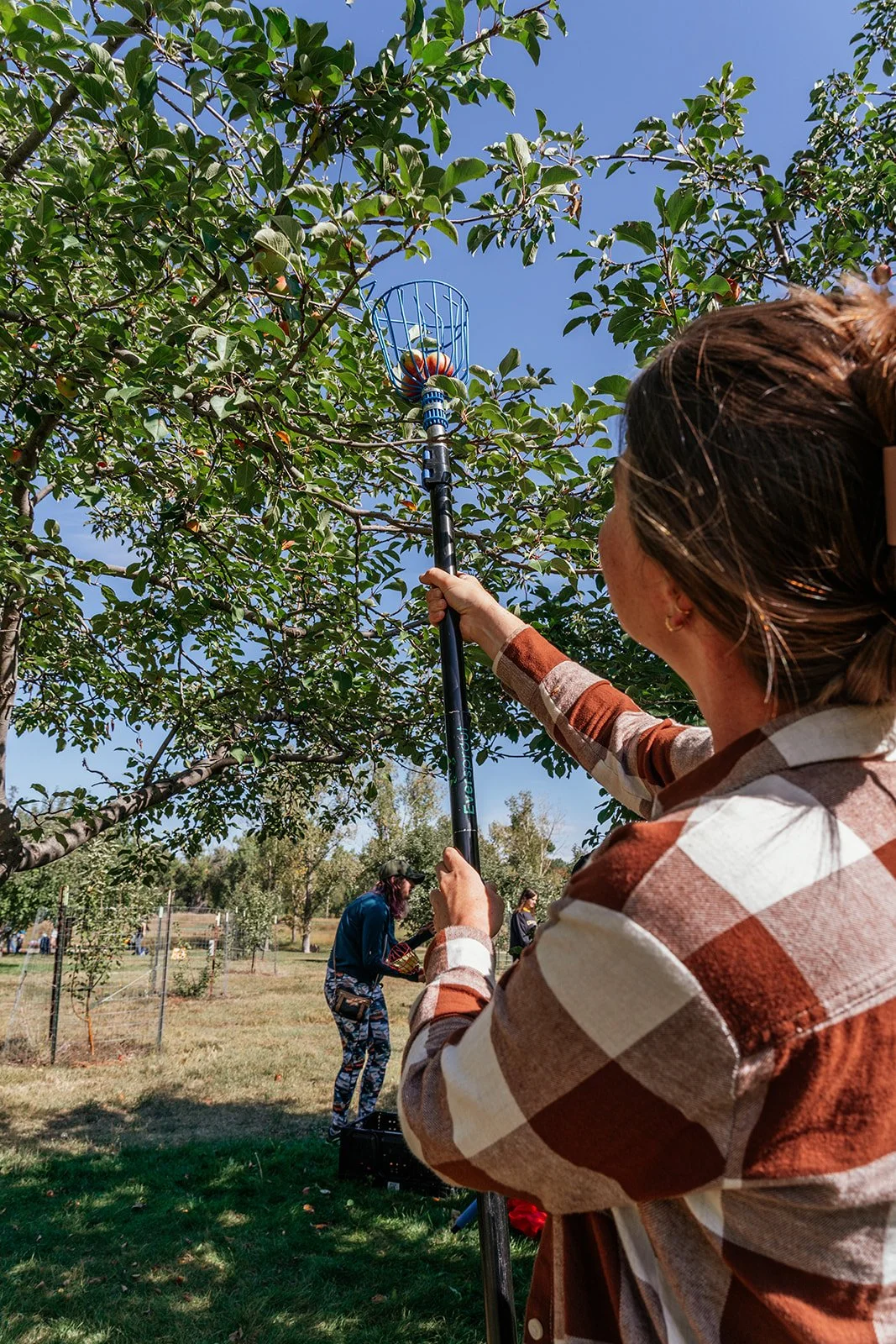
Harvest Leaders make our work possible. The more trained leaders we have, the more harvests we can offer — especially in areas experiencing bear activity. Harvest Leaders coordinate volunteers on-site and help ensure fruit is picked safely and efficiently, keeping attractants out of neighborhoods.
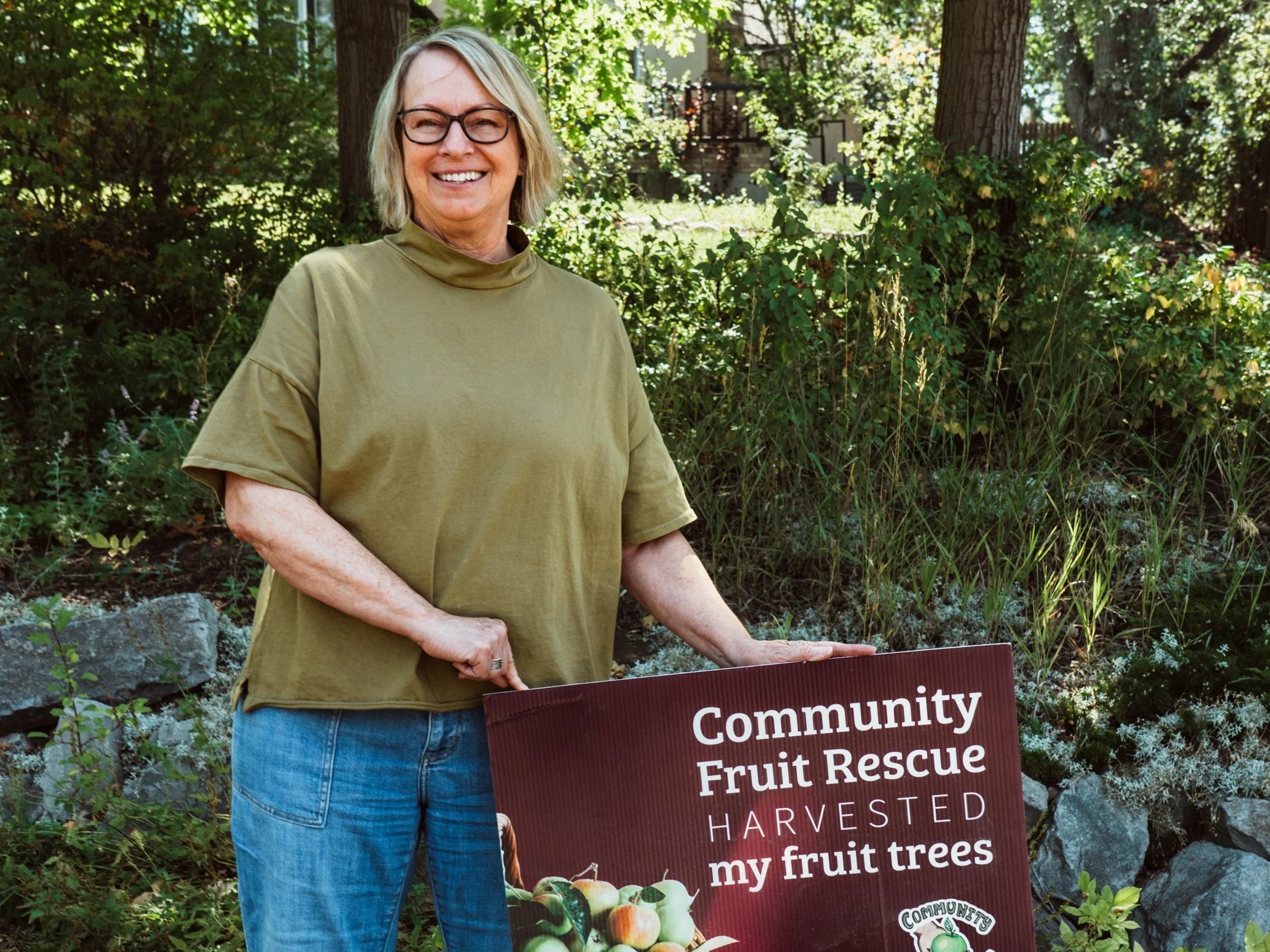
Request a Harvest
Even if you haven’t seen bears near your home, ripe fruit can attract wildlife from surprising distances. Requesting a harvest helps ensure fruit is picked and shared before animals find it, reducing the chance that bears or other wildlife begin frequenting your neighborhood.
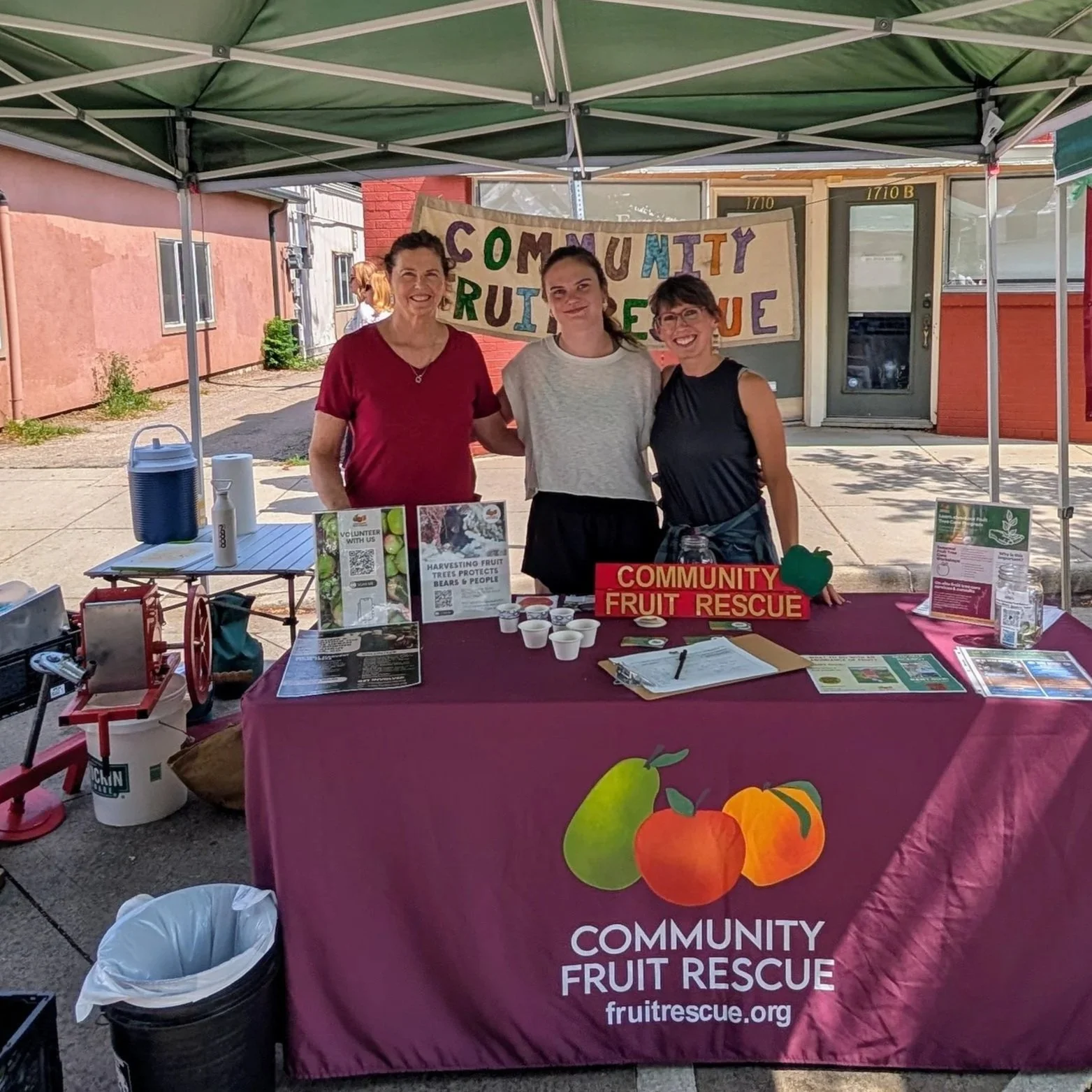
Help with Outreach
Join our outreach and events efforts to help spread the word about living responsibly with wildlife. Volunteers support community events, neighborhood outreach, and educational efforts that help residents understand how to manage fruit trees and other attractants.